Monday, August 31, 2020

ND Runner Interview #4- (Almost) 20 Questions with Alex Bartholomay

 Note: this is the 4th post in a series of interviews with some of the North Dakota runners either currently making a name for themselves or at one time did make a name for themselves. To check out the others, go here

--------------------------------------------------------------------------------------------------------------------------------
On Saturday, October 23rd, 2010, on an overcast day, a 7th grader from Bowman County named Alex Bartholomay finished the hilly 5k at the North Dakota Class B State Cross Country Meet in 20:51, finishing 107th place. 


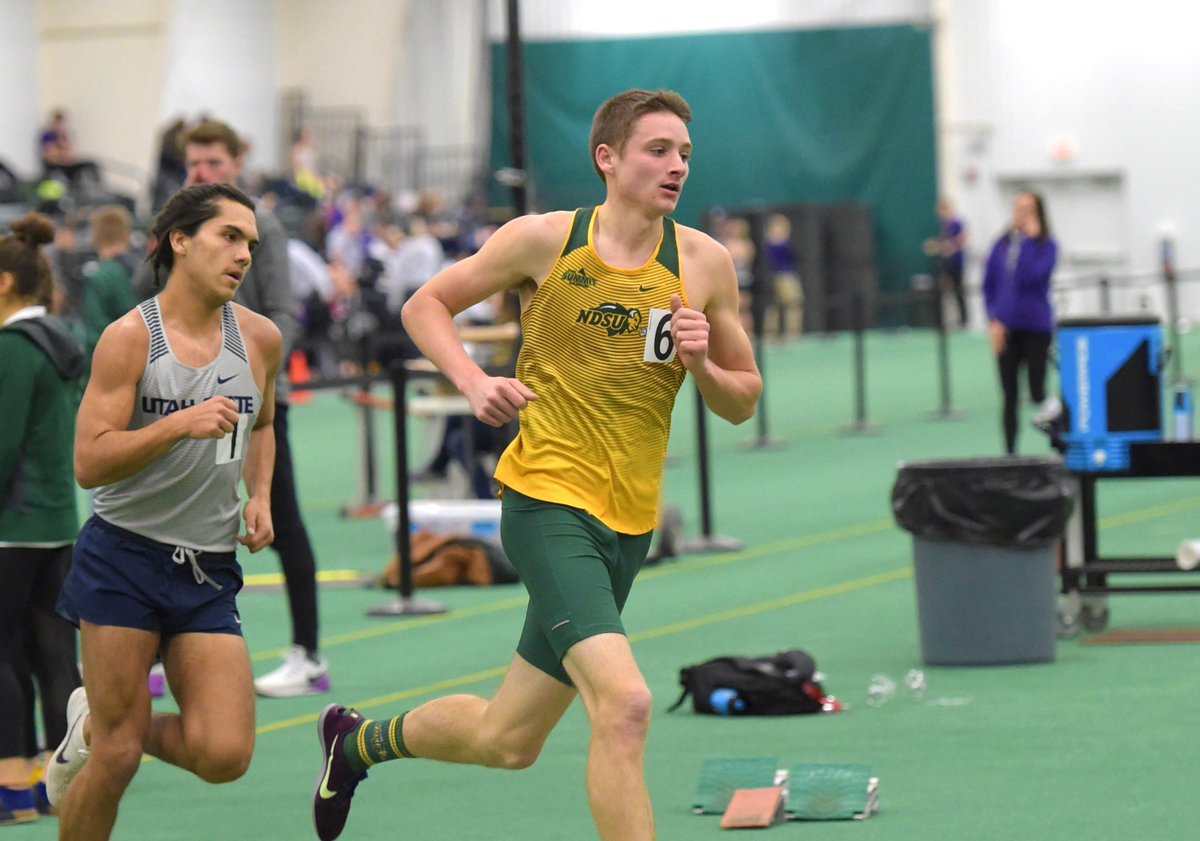
On Saturday, February 29th, 2020, a month after running a mile in 4:07, Alex Bartholomay of North Dakota State won the individual title in the 3000 meters at the Division 1 Summit League Indoor Track and Field Championships, running 8:20. 


We all love a story about the small-town guy making it big. Alex Bartholomay is currently one of the fastest North Dakotans on the track, even cracking into the top 10 all-time for the mile in this last year (top ten lists here). Coming from Bowman County, one might not expect that to be the case. The town of Bowman rests in the far southwest part of the state, close to both Montana and South Dakota. Bowman County is just slightly smaller than the state of Rhode Island and has a whopping 471 students total in grades k-12. This county sits in the heart of the 'empty quarter' of the United States, characterized by sweeping cattle country, wheat fields extending for miles, gravel roads to nowhere, and lack of services. 


And yet, historically Bowman County has been one of the strongest Class B programs, amassing dozens of state titles in boy's and girl's cross country. Today, we will meet a runner who never won a state title in high school, but has managed to become one of the top distance runners in NDSU history. 

Meet Alex Bartholomay. 

----------------------------------------------------------------------------------------------------------------------------


NDSU Track & Field on Twitter: "Junior Alex Bartholomay (Bowman, ND) was  the top collegiate finisher in the mile at Minnesota, running a  personal-best 4:07.73. He now ranks 5th-fastest in NDSU history!…
Alex Bartholomay at the NDSU indoor facility, courtesy of NDSU Track and Field Twitter

High School:

1.)     You started off your high school career at Bowman County, surrounded by vast plains and gravel roads. Can you describe what your experience there was like?

Bowman is well-known for the success that we have had in our cross country program. We were dominant during the 80’s and in recent years have been consistent placers in the top 5 teams at state in both the boys’ and girls’ program. The tradition there is something that many of our parents started and we got to experience as well. Our coach, Jon Jahner, always kept practices fun. He understood that running was something very few high schoolers absolutely loved. He would often give us popsicles after practices which was a selling point for kids to join the program. The kids who went out for the sport showed up to practice and worked hard each day. As we improved and started receiving recognition in the polls, we enjoyed the moments, but never got complacent with where we were. A lot of that had to do with Mr. Jahner continuing to motivate us throughout the season.

2.)    Bowman County has had tremendous success in cross country historically, but you ran during a time of absolute domination in Class B Boys by New Town. What did it take to mentally prepare to race such a strong team?


I enjoyed the opportunity to race against the New Town boys every time we saw them. They were a group of guys who had fun doing what they did. They were very dominant, but that helped motivate me to be a better runner. I knew going into each race that there was going to be strong competition and that it was going to take a good race to stick with them. No matter how big the meet was, I was always looking for the yellow New Town uniform to measure where I was within the race.


3.)    What kind of training did you do in high school?  Any secret running spots?

 I was low mileage in high school, running about 20-25 miles a week in both cross country and track. Mile repeats were always the big workouts during cross season. We would also do tempo runs often. My long run during my high school career was 7 miles. Most of the workouts during track season would be done on the track doing a little bit more shorter reps. I would train five or six days a week depending on our race schedule and would not train during the winter because I played basketball.We would have about 5 different roads that we would bus out to for practices. They were not anything special, just gravel roads with the typical rolling hills that are found in western ND. We never got too adventurous when it came to finding roads to run on.


4.)    Your junior year of high school you finally cracked the top 20 at state cross country (finishing 7th) and the top 8 at state track (6th in both the 1600 and 3200). What changed around your junior year to allow for that jump in performance?


I felt like my biggest jump during my high school career happened my sophomore year. I hit a growth spurt and my body matured a bit during that year. I was able to lead my team during most of the races that year. I didn’t break into the top 20 or get on the podium in track, but it was the first time that I felt like I could actually be successful at the sport of running. That gave me the confidence going into my junior year to break into the top 10 and get onto podium in track. Leading up to my junior year of cross country I put in a few more summer miles, but nothing too major. The biggest change was just the way I approached each day of practice. I went in with a clear goal in mind.


5.)    What was your favorite place to race in high school?

My favorite place to race in cross country during high school would probably be Mandan’s course. The race was ran on a well-maintained golf course. The meet included a lot of Class A teams as well as Class B teams so there was always good competition. It was a very flat course, so times were usually fast.

For track I always thought that The Bowl in Bismarck was the best spot to run. It seemed like PR’s came every time you raced there and the environment during the state meet was unbeatable.

College:

6.)    After high school you continued to NDSU. Why run at NDSU?

My senior year I looked at a few different D2 schools for running, and my mom convinced me to submit my information to the coaches at NDSU. They brought me in for an unofficial visit and told me that they could guarantee me a spot on the cross country team, but that a spot on the track team was not guaranteed. They told me that I could come in as a preferred walk-on. That was all I needed to hear. I grew up a fan of the Bison and dreamed of wearing the Bison uniform. It was an easy decision.


7.)    Your distance coach at NDSU has been Andrew Carlson, one of the fastest North Dakotans ever, sporting a sub-14 5k, sub-29 10k, and 2:11 marathon. What is it like to train under a coach who has such incredible personal accomplishments? What kind of training do you do?


Andrew’s experience as a runner is something that is invaluable. Throughout Andrew’s career he has experienced most things that we would experience throughout the course of our college career. Andrew centers his life around running and he is very knowledgeable of the sport. He isn’t afraid to give us advice based off his experiences. As for training it depends on what season we are in, but a typical week will have 2 workouts, 1 long run, and mileage the rest of the days. I keep my mileage for cross season around 80-85 miles a week and drop down to around 75 during track season. We do a lot of longer workouts during cross season. Indoor season is a lot of treadmill runs so we tend to do a cutdown run most weeks and finish with fast reps on the track. Outdoor workouts tend to be similar to indoor, I just throw hurdles in on certain reps to get the feel for the steeplechase.


8.)     Freshman year you competed in a lot of races ‘unattached’, which for our readers is what athletes commonly do while redshirting- you can run at a race without representing your team. What was your freshman year like?

I knew from the beginning that I would be redshirting all three seasons my freshman year unless something drastic changed. I came into college as someone whose body wasn’t fully developed yet; I was young, and low mileage in high school. Redshirting my freshman year allowed me to focus on building up my mileage slowly and getting accustomed to the college running scene. The only reason I run is for the chance to compete, so I made sure that I drove myself to every race the team went to that was within a reasonable distance. This still allowed me to compete while letting my body develop another year.


9.)    Throughout your college career, you’ve had a steady improvement in races, cutting your 1500 meter time to 3:51, your mile time to 4:07 (5th fastest in NDSU history), and your 3000 meter time to 8:15 (3rd fastest in NDSU history). What has been your recipe for continued improvement in college?


I would credit a lot of my success to the training that Andrew has drawn up for me. He has written training that allows me to continue to improve while staying healthy. Throughout my career I have trusted the training that he has written, and it has paid off. I have had teammates along with me the entire way that have helped push me in workouts and in races. When it comes to race day, I can step to the line with confidence knowing that I am in a position to run fast times.


10.)  After many close attempts, in February of this year, you finally broke through and won an individual title at the Summit League Conference Meet, running 8:20 to win the indoor 3k. What was that moment like for you?


It was definitely a great feeling crossing the finish line of that race. Going into the Conference meet I knew that I had an opportunity to win a title, whether it be in the 3k or the mile. It was a relief to accomplish that goal on Day 1 of the meet. As a college distance runner, you train year-round to be put in positions where you can win races and the conference races are the ones that matter the most. Once the indoor meet was over, I got a couple of days to soak it in and realize that all the hard work I had put in was worth it.


11.) What’s your favorite part of the NDSU program?


I enjoy being a part of the strong tradition that NDSU has developed. Throughout our entire athletics program, the culture is one that sets expectations of winning conference titles and even National Championships. The athletes that are brought in are focused and determined to continue the tradition. Our track program is no different. We have found a lot of success competing in the Summit League and bringing home conference titles. Our coaches guide and support us along the way and the teammates know what their expectations are. When it comes time for a conference meet, everyone has one goal in mind and that is to compete for their teammates. I’ve enjoyed the opportunity that I have been given to be a part of the tradition of NDSU athletics.


Pandemic:

12.) As you started getting some of your best personal times, COVID hit. Talk a little about how cancellations and closures have affected your training.

Andrew has tried to keep our training as normal as possible throughout all the cancellations. When outdoor got cancelled in March, we continued training like we were in an outdoor season for the most part. Our summer training was normal because we were fully planning on having a cross season. We tried to simulate a few races by creating events within the team where we race on the road individually and submit our times. That helped break up the training and gave me something to look forward to in training. The biggest difference in training was doing it all alone starting in March. I was lucky enough to be able to come back to Fargo for the summer and train with some teammates for that stretch.


13.) What have you had to do with your mindset to stay positive during this time?


My mindset throughout this entire pandemic as it related to racing is that I’m not going to waste my time worrying about something that I can’t change. We have now had two seasons cancelled, but I did not want to sit around and mope about it. I have been able to look towards the future and continue training hard with the hope that when the pandemic hits a point where we can compete, I will be ready to continue improving my times.


14.) What are your goals for this season? This is your last year at NDSU, right?

I am a 5th year at NDSU right now, but with the COVID cancellations I currently have an opportunity to come back for a 6th year in both cross and outdoor track. I have not made a decision on whether I will use that extra eligibility or not, but it is an option. My goals for the season is to add a few more conference titles. The hope is to be able to push everyone around me so that we can celebrate winning more team conference titles as well. I have my eyes set on making a Regional meet outdoors. As for times, I would like to get as close to the 4:00 barrier in the mile and 8:00 in the 3k. Since the last outdoor season got cancelled, by the time outdoor rolls around again it will have been 2 years since the last outdoor race. I would like to shave time off both my 1500 and steeplechase and be around 3:45 and 9:00 in those.


Personal:

 15.)  Growing up, did you have any North Dakota runners or athletes that you looked up to or drew inspiration from?

As a junior high and young high school runner, the teammate at Bowman County that I looked up to the most was Michael Palczewski. Mike was an all-around good athlete who I was teammates with in cross country, basketball, and track. I had the opportunity to watch him win a state title in the 400m dash my 8th grade year.

The North Dakota runner who I looked up to the most was Jake Leingang. Jake was someone who was doing things as a high school runner that I thought were crazy coming from someone from North Dakota. When Jake announced he was transferring back home to NDSU, I was excited for the chance to be a teammate with him. (editor's note: Leingang was competing at the University of Oregon before transferring to NDSU)

16.)  How about pro runners? Do you have a favorite?

I have never followed professional running much, but since I’ve came to Fargo, I have heard a lot of conversations about different professional runners. During the COVID outbreak we had a chance to have a Zoom meeting with Craig Engels. From listening to Craig talk it was apparent that he enjoys what he does and always has a fun time with it. Coming from someone who runs at that level, it was cool to hear his perspective on running.  


17.)  What’s your favorite place to run in North Dakota?

My favorite place to run in North Dakota is the gravel road by my house, especially after I have been away for a while. There are no spots that really stand out when I think about places I’ve ran in North Dakota. We do some basic routes in Fargo, but I haven’t been very adventurous when it comes to finding cool places to run.

18.)  If you could give one piece of advice to younger runners out there, what would you tell them?

Stay patient with training. Fitness is something that can take a long time to soak in. There will be times where you don’t see much progress, and there will be times where you see very small progress, but if you stay on it every day, you will be rewarded.

19.)  Last question- what’s something on your running bucket list?


I’m not sure that I plan on consistently running too much longer after I finish my college career, but one thing that would be on my bucket list is to run a marathon. Depending on how everything plays out with that, I think it would be cool to run the Boston Marathon too before I call it good.  

-------------------------------------------------------------------------------------------------------------------

A special thanks to Alex Bartholomay for giving us a look at a college distance runner's mindset and share some of the things he's experienced! Good luck this season!


Thursday, August 13, 2020

Laura Roesler- A Short Profile

 *The following is an article that represents part of a series on North Dakota running research. If you want to read about more incredible athletes from the greatest state in the Union, look under the 'Pages' tab on the right and click on 'North Dakota Running Research'.*

---------------------------------------------------------------------------------------------------

Few high school athletes in any state have ever so thoroughly dominated their sport quite like Laura Roesler did from 2005-2010. She amassed an incredible number of state championships, broke numerous state records, and even ran at the Olympic Trials; this was, of course, just the beginning of a successful post-high school career as well. The English language struggles to describe that level of dominance, but I will attempt. 

High School Laura Roesler at the 2008 Olympic Trials. Photo by PhotoRun.Net


Roesler ran her high school career at Fargo South, rival of my alma mater, West Fargo. In North Dakota, student-athletes can start competing at the varsity level in 7th grade and continue through their senior year of high school, a total of 6 years. At the High School State Track and Field Meet, an athlete can run up to 4 events, which yields a total of 24 possible state titles an athlete can win in their high school career. Most athletes would be satisfied with one title. The best of the best may win as many as 10 throughout their career. Laura Roesler won 20. That's right, twenty INDIVIDUAL state track titles from grades 7-12. In fact, from her 8th grade year through her junior year, she won all four titles every time. Her senior year, she only won three, but another athlete had to break the state record to beat her (more on that in a bit). WOW. That is dominance. Throw in a couple other state championships, and we're talking about something amazing. 

Let's dig a little: 

7th Grade

In the fall of 7th grade (2004), Roesler placed 2nd at the State Cross Country Meet, running the 4k course in 15:18 and finishing 19 seconds behind Minot's super stud Melanie Funke. The next 7th grader was a full minute behind. 

In the spring of 2005, she ran 4 events at state track (not an easy feat for anyone): 400, 800, 4x400, and 4x800. She placed 5th in the 800 (2:20), 3rd as leadoff for the 4x400 (4:07), and 5th as the third runner in the 4x800 (9:55). BUT, she broke out and won the 400 by a full second with a time of 57.88, only 1.5 seconds off the state record. Just a reminder that 7th graders tend to turn 13 sometime during the school year.   

State Championships Tally: 1

8th Grade

In the fall of 8th grade (2005), Roesler again finished second at State XC, again to Minot's Melanie Funke. Her time was 15:37, 7 seconds away from that title. 

In the spring of 2006, she officially took over ownership of the North Dakota State Track Meet, sweeping the 100, 200, 400, and 800 for the first of 4 years in a row. This means that on Day 1, she made it through prelims in the 100, 200, and 400, and then came back the next day and won the finals in all four events. Here's the stats: 

100: 12.40
200: 25.07
400: 57.67 
800: 2:20.53

I wonder if the weather might have been a little crappy, because times were generally slow across all divisions. I'd also like to add that Roesler was personally responsible for 40 of 2nd-place Fargo South's 114.5 points at state. At this point, pundits across the North Dakota track circuit were probably wondering if they were witnessing the beginning of one of the best athletes in state history, or a young female athlete that was peaking early in high school? They'd have their answer. 

State Championships Tally: 5

9th Grade (Freshman)

In the fall of her freshman year (2006), Laura Roesler took that elusive 1st place at the State Cross Country Meet. Let's not think that it was a dominating performance though: that pesky Melanie Funke finished 2nd in 14:33.00, which is the exact same time listed for Roesler. A sprint to the finish between the top runners from each of the last two years? Yes, please.  

Let me put this into perspective for you: in the same year, Roesler won the longest race competed in North Dakota high school sports (4km) and the shortest (100m). This means that she was simultaneously the fastest distance runner and sprinter in the state. AT THE SAME TIME. Absolutely insane. 

In the spring of her freshman year (2007), Roesler again swept the 1, 2, 4, and 8 at the state meet. Here's the stats: 

100: 12.90
200: 25.75
400: 55.56 (State Record)
800: 2:17.11

Here we see her first state record, in the event she won her first state title two years previous. She won the 400 by two full seconds. She only won the 100 by 0.03 seconds. At this point, it's clear that Roesler has the strength of a mid-distance runner, because she can hang with the cross country runners, nip the sprinters at the line, and demolish everyone in between. Her 40 team points helped Fargo South to the state title with 156.5 points. At this time, Roesler is the shining star of the state. We aren't even close to being done. 

State Championships Tally: 10 individual, 1 team

10th Grade (Sophomore)

In the fall of her sophomore year (2007), Roesler, for the second year in a row, won the State Cross Country Meet. This was Melanie Funke's senior year, and the finish was again close: Roesler's 14:36 to Funke's 14:38. The only other people under 15? Alissa Mears (West Fargo) who won the next year, and Tarin Lachowitzer (FS) who won the next three years after Mears. What a stacked race! Was it the deepest in state history? I'll leave that up to people who were actually there. 

In the spring of her sophomore year (2008), she, again, *yawn* won all four events at state track. Stats: 

100: 12:07
200: 24.30 (State Record)
400: 55.76 
800: 2:10.78 

This time she scored 40 of her team's 120 points (that's one-third), but they only took 3rd as a team. 

Ok, these times are starting to get elite. The 200 was won by over a full second, the 400 by two seconds, and the 800 by NINE (!!) seconds. Roesler has a vice-grip on the xc/track scene in this state. She could hop into any non-hurdle running event at state track and win. This is year that things change for her, though. 

On June 27th, 2008, 16-year-old Laura Roesler toed the line of the first round of the 800 at the U.S. Olympic Trials in Eugene, Oregon. During track, she had run 2:03 to qualify, and now she was racing against the professionals- the people that would be on the Olympic Squad. She ended up running 2:04.3, which placed 7th overall and was easily enough to advance her to the semifinals. To be clear: nobody knew who she was- an unsponsored high schooler from North Dakota. 

On June 28th, 2008, 16-year-old Laura Roesler toed the line for the semifinals of the 800 at the U.S. Olympic Trials in Eugene, Oregon. She ran 2:06.82, which placed her 12th, and was not enough to qualify for the next round. Her season ended there, almost a month after the state track meet where she pummeled on lesser beings. "There's not much to do in Fargo", she tells the media. 

State Championships Tally: 15 individual, 1 team

11th Grade (Junior)

In the fall of her junior year (2008), Roesler placed 50th at the State Cross Country Meet, with a time of 16:37. 

....

Wait, what? I actually competed at this meet as an athlete, and the question was definitely asked how the greatest track athlete any of us had ever seen ran so poorly at state. I can't say I know the answer, but my best guess is that she probably took a long, deserved break after a track season that almost made it to July. She probably eased into training and wasn't in 100% fitness at state. Maybe she was hurt, I don't know. 

In the spring of her junior year (2009), she started out the state track meet by breaking two state records in the prelims: the 200 (24.66) and the 400 (55.37). Then, she came back for finals and swept all 4 events, again. 

100: 12.45
200: 25.16
400: 55.10 (State Record, again)
800: 2:13.82

She scored 40 of second-place Fargo South's 94 points. As an individual, she would've placed 8th out of 14 in the team standings. Lurking 1-2 places behind her in each event was a little-known 8th grader from Minot named Morgan Milbrath. With Roesler's absolute dominance of the state for so many years, nobody wondered to themselves, 'will another Minot athlete throw down with Roesler at state?' We were about to find out. 

State Championships Tally: 19 individual, 1 team

12th Grade (Senior)

In the fall of her senior year (2009), Roesler placed 5th at the State Cross Country Meet, running 15:08 and finishing 15 seconds behind 1st-place teammate Tarin Lachowitzer. At this point I wonder if Roesler's training was more 400/800 focused in preparation for college and cross country was more of a base phase for track. Maybe she had injuries, I'm speculating at this point. I've just always found it strange that she maintained dominance on the track but not on the cross country course. 

In the spring of her senior year (2010), Roesler received the challenge of her high school career (other than the Olympic Trials, of course). For the first time since her 7th grade year, she did not win all four events at state track, but DO NOT let yourself think she had slipped off her game. She still won the 200, 400, and 800, but not the 100. You see, in the 100, 200, and 400, freshman Morgan Milbrath (Minot) pushed her further than any athlete in previous years. If you want read a more in-depth discussion of that weekend, I suggest checking out this post: The Greatest Race I've Ever Witnessed

Here's a short breakdown: 

100: 2nd place, 12:38 to Milbrath's 12:35. Both athletes had flirted with the state record in prelims. 
200: 1st place, 24.9 to Milbrath's 25.07. Both athletes had shattered the state record by over 3/4 of a second in prelims. 
400: 1st place, 53.25 to Milbrath's 53.31. Both athletes won by over 5(!!) seconds, destroyed the state record by over 2 seconds, and ran 2 of the top 5 high school times in the country that year. 
800: 1st place, 2:17.64. Milbrath ran a relay. 

Fargo South placed second as a team with 133 points, of which Roesler scored 38. 

State Championships Tally: 22 individual, 1 team 

To round out her high school career: 22 individual state titles and 1 team title; currently is the 2nd-fastest in state history in the 100 meters; currently is the fastest in state history in the 200, 400, and 800 meters; qualified for the semifinals of the US Olympic Trials. Not bad, eh? Oh, she went on to that track school- the University of Oregon. 

College Roesler. Photo from Hapa Productions


College

Roesler was highly recruited with her 400/800 talent. Her 800 time of 2:03 in her junior year of high school would put her up there with some of the best in the NCAA every year, and if she could shave a few seconds off of that, she'd be looking at an NCAA title to add to her resume. 

In her freshman year of college, she qualified for both the indoor and outdoor national championships. At indoor nationals she placed 11th in the 800 prelims, and at outdoor nationals she placed 10th in the 800 prelims, neither was good enough to advance. She did place 8th and 3rd, respectively as a member of the 4x400 relay for Oregon. Her pr that year: 2:03.12.

In her sophomore year at Oregon, she failed again to advance in the 800 at indoor nationals (16th in prelims), her 4x400 placed 10th, and her DMR (Distance Medley Relay, 1200-400-800-1600) placed 2nd. At outdoor nationals, she had a breakthrough, running 2:02.09 in the prelims to advance, and then running 2:02.96 in the finals to place 4th. She was an All-American! Additionally, her 4x400 relay placed first- she was a National Champion!

In her junior year, she kept climbing. She placed 2nd at indoor nationals (another All-American) in the 800, running 2:02.32, and her 4x400 won another national title. At outdoor nationals, she tacked on ANOTHER 2nd place (another All-American) with a blistering new PR of 2:00.98 in the 800. Oh, and her 4x400 took 4th. 

Senior year was her last chance at an individual title. She started off the season with a 4:40 indoor mile and a 2:01 800 a week later. At indoor nationals, she finally did it- 1st place with a time of 2:03.85. Laura Roesler was an NCAA Individual Champion! Her 4x400 won again, too. Outdoors, she ran 4:19 in the 1500 and lowered her 800 PR to 2:00.54. At nationals, she dominated with top time in prelims and then came back and won another national title, this time with a 2:01.22. Her 4x400 placed 3rd. 

So this girl from Fargo, North Dakota, went to powerhouse Oregon and won two individual NCAA titles in the 800 and three NCAA championships as a member of the 4x400 relay. She was truly great. To honor that, she was awarded the Bowerman, which is annually given to the best male and female track and field athletes in the NCAA. The next step for an athlete of her caliber? Professional career.

Pro Roesler at the Pre Classic. Photo from JWill Photography
 

Professional

After college, Roesler signed with Nike. In the 2012 and 2016 Olympic Trials, she was unable to qualify for the Olympic Team, despite having PR's similar to the some of the athletes that made it. She did have a breakout race in 2014 after she finished her college career, running 1:59.04 at the USA Track and Field Championships, and she has qualified for two different world track and field championships.

Unless I'm mistaken, she is the only female North Dakotan to go sub-2 in the 800, which is an amazing accomplishment. Recently, she's been training in Jacksonville, Florida and gearing up for the 2020 Olympics, which we all know didn't happen. She's not done yet, despite the ups-and-downs of pro running and nagging injuries. Hopefully we hear more from her next year at the Olympic Trials!


Links I used to assist me: 

North Dakota All-Time Class A Girls 

All-Time State Track Results

NDHSAA State XC History

Milesplit State XC Meet History

NY Times- Roesler at the Trials

Runner's World Pre-Trials Interview with Roesler

Roesler's TFRRS Profile

The Forum- Olympics Cancelled for Roesler, Everyone

The Forum- Roesler Rediscovering Running

She Even Has Her Own Wikipedia Page!!

Sunday, August 2, 2020

That Time the West Fargo Packer Travel Bus Got Pulled Over on the Interstate

In the cold, blustery October weather, we warmly celebrated our victory while bundled in winter coats and hats. For the second time in school history, we had won the Eastern Dakota Conference (EDC) meet, the first time being the year before. Powered by three runners in the top 5 and all of our scorers in the top 20, we defeated the snow and all of the Class A schools in the eastern part of the state, and we were elated.

We were having one of the best seasons in our school's history. Our coach subscribed to a 90s approach to training, which featured low mileage and multiple intervals sessions each week. The training regimen we followed was a great way to develop high school speed without a strong emphasis on long-term growth. We spent years developing a core group of runners that would regularly violate one of the principles of distance running: taking easy days easy. We would hammer many of our daily runs and intervals, leaving us with enough speed to fight through a 5k. In 2007, we started working our way through the conference ranks; in 2008, we won the conference meet for the first time through the puddles of Rose Creek in Fargo; finally in 2009 we were ranked as high as 2nd in the state (behind perennial powerhouse Bismarck High) and were on the verge of something special. We combined it all together and got the 'W' in Grand Forks at our first of two big meets- things were looking up!

Our celebration brought us to the local Walmart on our way out of town. Knowing next-to-nothing about nutrition and in the midst of celebrating, we purchased obscene amounts of unhealthy snacks- especially Little Debbie's. We hopped on the bus and headed for the interstate.

I-29 between Grand Forks and Fargo might be the most boring stretch of interstate in the United States. This 60-mile stretch stands out for being particularly flat and desolate. The road is full of sugar beet trucks and speeding Canadians. The countryside is painted with wheat, corn, soybean, and sugar beet fields. Every few miles are railroad towns that had as many as 200 people during their haydays. Halfway between Fargo and Grand Forks is the metropolis of Hillsboro, which I've heard might even have 40 kids per grade at the school. If you struggle with falling asleep, drive I-29. Trust me, it was also my drive to and from college, so I'm quite familiar with it.

Naturally, a celebrating team on a barren stretch of road needs to flex its teenage testosterone, right?

Right????

The outwardly proud West Fargo Packer Travel Bus entered I-29 in its usual state: the coaches sat in the front, followed by the girls team, and then the boys in the back, arranged by seniority. A plan was concocted, and we passed our snacks to the seniors in the back. Some food was thrown towards the front of the bus, but it didn't generate a sufficient reaction- the boys needed MORE. We looked out the window and saw a car coming in the distance. As it approached, the seniors prepared for strike. The car moved left to pass the bus and closed the gap. The senior grabbed a snack, held it out the window, waited for the opportune moment, and dropped it right on the hood of the car.

Nailed it!

Most of the boys were hiding underneath their seats, trying to avoid laughing loud enough to attract attention up front. Our assistant coach, Brad, was looking at us through the front mirror and he KNEW something was up. We laid low for a while to let things cool off before planning the next assault.

The target was sighted. The next car behind the bus had seen the tragedy previously, and was hesitant to pass, fearing the same fate. The bus was going slow, however, and they needed to get around. Sensing their predicament, our seniors prepared for another launch. Suddenly, the car moved left in a burst of speed and went for a quick pass. Our seniors, hiding, jumped up and released the snack.

BAM!!

Right on the windshield!

The car continued speeding forward to get past the bus, and then made a fateful decision: they tried to clear the Little Debbie's Swiss Roll from their windshield by activating the wipers. This accomplished exactly one thing: it smeared chocolate all over the windshield while they sped away We couldn't contain our mirth and started making a commotion in the back. I caught the Assistant Coach's eyes in the rearview mirror, and he looked displeased. He slowly, calmly moved his head side-to-side. I hid behind my seat. Younger athletes a few rows up were starting to pick up on the festivities and wanted to watch- we were being exposed!

Meanwhile, the seniors had already identified a new target. Behind our bus, a semi driver was spaced well beyond normal following distance, clearly holding back after seeing what befell the vehicle in front of them. A short discussion begun, with the topic being how to approach this new challenge. The resulting strategy was executed by one of the senior captains- he reached out of the window (holding a snack, of course), and threw the Little Debbie's snack far into the air, where air resistance and decreased momentum knocked it away from us, while gravity started pulling it down.

The wise driver, drawing upon previous knowledge, visibly swerved on the interstate, even though the projectile fell short of the target. The driver then slowed and gave us even more space. We fell back beneath the bus seats and suppressed our laughter again. With no targets in range and an assistant coach looking at us with deathly hawk-eyes, the plug was pulled on the operation and we resigned to finish the ride home in relative peace.

As we entered the Fargo area, we went through a small area of road construction and everybody was moved from two lanes into one. A state trooper was sitting in the median, looking for speedsters. As we went past, the trooper suddenly flew onto the interstate, got up behind our bus, and flipped the lights on. Our bewildered bus driver moved over to let the officer pass, but quickly learned that WE were the ones getting pulled over. Simultaneously, the semi behind us and the car in front of us (the one that had a direct windshield hit) pulled over as well; they both must have called it in.

S***

All of us immediately sought refuge behind our seats, knowing that this was NOT going to end well, because there was nowhere to run, nowhere to hide- we were screwed. Some of the athletes in front looked back, confused. Most of the girls, however, looked back with that 'what STUPID thing did you do this time?' look. Our head coach's face was turning purple. The officers stepped up the stairs of the white travel bus with "West Fargo Packers" painted proudly on the side, while car after car sped past.

"Whoever is throwing food out of the windows needs to come up here NOW."

..........

We were silently panicking. What now? We were dead to rights with no escape. Two hours ago we had won the conference meet and now we were pulled over on the interstate with cops ready to drag us out of the bus by our ears! I heard some quiet expletives behind me as those who actually threw the snacks were sweating bullets. Our assistant coach was not impressed:

"If you did it, GET UP HERE NOW."

.........

After another short pause, our two senior captains stood up and walked slowly to the front of the bus. The officers spoke briefly to them and then they all walked off the bus and towards the car in front of us. Immediately, hushed whispering started throughout the bus, until our head coach cut through the noise:

"When we get back to the school, boys stay after. We're gonna have a talk."

.........

S***

My phone vibrated; I read the text message:

'Is that you guys pulled over? Is everything ok?'

A friend from Kindred who ran for Fargo North had just driven past in the Fargo North bus and seen us on the side of the road. The embarrassment was beginning to set in as tense conversation began to grow in the bus. We were in SO much trouble.

The captains had to apologize to each of the drivers for their actions, and then they were let back on the bus. The story is that they were each fined for "distributing rubbish". Each of them was suspended from the next meet, which is a meaningless meet tucked in between conference and state, so they were each able to run at state. Our head coach chewed us out a little bit, but we still got into further shenanigans throughout the rest of the season.

Maybe it was karma, but we went into the state meet that year ranked 2nd in the state, but we crapped the bed and ended up finishing 7th. Either way, let it be known that in the fall of 2009 a group of cross country runners got their bus pulled over by the cops for throwing food out the bus windows at passing traffic. No wonder we had a reputation for being knuckleheads.....


End


P.S. I partook very little in the many of the events we got in trouble for. I was always kind of a 'walk-the-straight-line' athlete, and I never really liked the culture and team atmosphere as I went through the program, but few things beat having a crazy story to tell! 

Wednesday, June 17, 2020

Reflections During a Workout in a Pandemic

I stepped out of the pickup into the warm, damp Virginia air and hid my keys. On my left, a large field with a cemetery; on my right, a Baptist church whose parking lot I was using. The breeze fought its way through nearby thick tree cover, and gently brushed again my exposed chest. All else was still. I hit start on my watch and started shuffling onto the road. With no shoulder, I ran along the side of the skinny road, hoping that every driver I encountered today would be kind.*

It was around 8:30 on a Wednesday morning in rural Gloucester, Virginia. The sky was overcast, threatening rain, while the air, damp and refreshed with a cool breeze, hinted at humidity levels unparalleled west of the Missouri River. My road of choice today was a 6 mile loop through an area called a 'neck', which is essentially a piece of a peninsula. Somewhere only a few miles to the east was a large bay feeding into the Chesapeake Bay, but with such abundant tree cover, line of sight was usually blocked within a couple hundred yards, at most.

Just a few days before, my school year had finally come to an end. We all had to deal with a unique and fluid style of education that changed everything. Perhaps most important to me, I found myself sitting at home by myself for the majority of the day, five days a week. I would grade, check emails, and create assignments, but even through zoom calls with students, something was missing. I found myself attacking Ingrid when she got home, incessantly talking her ear off until she begged for mercy. I found myself getting abnormally angry at things and situations that weren't a big deal. I found myself at times paralyzed and unable to do basic household chores because I was just....lonely.

As I finished my warm up, I knew that I would need to take a pee before I started my work out, but this isn't some dusty gravel road in the middle of no where, and I can't just pull up anywhere and do what I need to do. So, I identified a good spot, checked for cars, jumped the ditch, ran past a NO TRESSPASSING sign, and hid in the trees. While I answered Nature's call, a vehicle drove past, and I got right up against a tree and hid. Noticing nothing, the driver continued without changing speed or direction. As the car drove away, I listened intently to sound of the wind, trying to detect any cars in the distance that may see me when I popped out of the woods. Hearing nothing unusual, I quickly ran out to the road and began my workout. The goal: 10 miles at 6:20/mile.

 I've been taking extra time during quarantine to drive to local areas for my daily run- anything to try to get out of the house for a bit, less my mental and emotional health decline. I've run at the high school (nobody there and I got kicked out after 2 months, because "it's closed"), a local middle school (nobody there), and a local park with trails (maybe a couple people on a weekday). What used to be my retreat from people and chance to reflect on my day has now turned into my public appearances. It also allows me to get away from the noise of internet and social media in the middle of absolute chaos. I've also been incredibly blessed to find a person to go run with in the mountains, which has lifted my spirits as well.

My first mile was 6:20, and my second mile was 6:21. I feel smooth and relaxed, confident that I'm going to be able to finish this workout. I'm training for a trail race next month in the Badlands of western North Dakota, where a piece of my heart currently resides somewhere in a north-facing juniper thicket overlooking the Little Missouri River. Before that I race I will have driven from Virginia to North Dakota to California back to North Dakota. Throughout that time, I'll see the landscape change from the East Coast to the Interior Lowlands, from the Midwest to the Great Plains, from the Rocky Mountains to the Sierras, and back.

Right now, all over the United States, people are faced with the same struggles- shuttered businesses, a global pandemic, race relations and police brutality, protests on the streets and at state capitals, and continued questions of when certain things will be open, and in what way. We're all struggling in our own way right now, straining to find a sense of normalcy in a sea of confusion and despair.

Running is my outlet. As the miles click by, the pace slowly increases. I run past woods, beat up trailers, a couple reclaimed plantations, roads that disappear into the trees, corn fields, and beautiful two story homes with American flags draped over the front porch. Though this is confederate country, I don't come across any confederate flags. The town I live in does have a large confederate monument, however, and we have seen all over the country how these symbols have become flash points in the debate over racism and how the country grapples with it to this day. I have students who are likely descendants of slaves, and other students who are likely descendants of slave owners. My ancestors farmed in a state that wasn't a state until 25 years after the Civil War was over, and so I've been learning a lot just by being here.

After mile 5, I decide that I feel a little too comfortable and start increasing the pace more, now entering into the 6:10/mile and faster range. I begin to make my second loop around the area, and not much has changed. Some of the houses around this area look incredibly tall and mighty, but upon further inspection have been lifted many feet off the ground by brick. With tropical storms and hurricanes always a worry on the East Coast during the summer and early fall months, storm surge is one of the biggest fears. Down here, people live only a few feet above sea level, and when storm surge brings water 4-6 feet above sea level, not only are roads inundated with water to where travel  by anything other than a boat is impossible, but people's homes are in significant danger if they are not raised from the ground. Basements aren't even discussed. The strongest foundation of the home can actually be above ground, protecting the home from natural disaster.

Many people have used this pandemic to reset the foundation in their life. I've taken the opportunity to reset my training, and many people have started projects at home, re-thought education, cooked new meals, checked finances and budgeted, and started new workout routines. We have been forced to examine our humanity and strip it down to the most basic layers of survival- food, water, and shelter, mostly because that's all the government would allow us to do. I think travel and movement is also a basic human function, and that's why bicycle sales have been at record highs, and so many people are out walking and jogging.

I finish my last few miles, chopping down to a 5:57 last mile, and come to a halt. My shorts have long since lost their last remaining dry spot, and my shoes are making squishing noises with each step. Sweat rolls of my face, arms, and legs. I stand up and start walking. It's quiet. I'm proud of what I've accomplished, but I also know that each step towards the pickup is a step towards having to go home and be alone. It's been a rough stretch these last few months, but somehow I think I'll emerge from this stronger. I've never wanted to be back in the school more than I do right now, and I'm really enjoying running right now, too. What really lifted my spirits though, was last week, in the middle of all of the chaos and panic, I had two students express that they actually missed having me as a teacher. That's all I needed.

Time to go clean.


*I was wrong, as usual. One thing that truly unites Americans all over the country is their distaste for slowing down and moving over for bikers and runners. 'Murica

Tuesday, May 5, 2020

When the World Looks a Bit Different, Part 2

To read about another time that my world was changed because of running- look here.


Many people who love running can pinpoint the first time that forever changed how they view running. For many of us growing up, it's simply that natural human function that allows us to chase peers across the playground, or perhaps a means of keeping up with older, faster humans. As we age, it can start to become competitive- if we all share this basic human thing- who can do it the best? Indeed, it seems that all runners can be neatly tucked into three categories- those that run to be in shape, those that run to beat others, and those that run because they love it. Of course, any given person can be a combination of those three things, but very few of us can claim to use it for survival in the year 2020.

I currently fall into all three categories, but most importantly I love doing it. I become more irritable around other people if I haven't run in a day or two, and the way I feel about my body decreases at the same time. Yes- some days it feels like a chore, but a bad day of running normally defeats a good day of sitting on the couch. Recently, for no particular reason, I was reminded of a time that the world of running changed before my eyes, and the limitless possibilities thereof were laid bare at my feet.

It was the summer after my junior year of high school. At this point, I had just completed my first year of track and had dumped baseball and swimming as a result. I was preparing for my senior year of cross country, but at West Fargo High School, that meant captain's practices where we might run 20-30 minutes, and would more likely end up causing trouble than getting fit. Our routes would take us through neighborhoods of West Fargo- sidewalks, unknowing people's backyards, parks, etc- it was all that I knew. I went to a big school and ran with a big team through a big town while preparing to race other big schools in other big towns. We had decent success. We had just won our second conference title the previous fall and had positioned ourselves to take second place at state, where we then had a disastrous meet where I don't even recall what place we took.

My best friend lived across the street, and word traveled to me that his friend Eric and his family was coming to visit and would be interested in a run. This intrigued me. I hadn't run with Eric before, but I heard that he was pretty good, running for the Class B Langdon Area team up in the state's icebox near the Canadian border. I decided to go for it and see what would happen. My experience running around my town was limited, because I ran at the high school Monday-Saturday during the season, and usually took Sunday's off. I wondered what knowledge Eric would bring. 

My town was a formerly sleepy town on the verge of an eruption. Seemingly forever a railroad town in between Kindred and Fargo, Horace, ND, sat right on the shores of the Sheyenne River and for many years served those who wanted nearness to Fargo without living there (they're called 'Bedroom Communities'). As Fargo expanded, Horace slowly became less and less isolated until you could see Fargo from town. Sure, there was only 2,000 residents, and sure, from anywhere in town you were always less than a mile or two from a gravel road that disappeared into the horizon, but Fargo was nearby. Now, years later, Horace is a full-blown suburb about to get a new high school attached to the West Fargo Public School District.

This summer's day though, was calm. The explosion had yet to get started, and Eric was here. His tall, trim runner build stood in the driveway, while my shorter, stockier frame walked across the road to meet him. After exchanging pleasantries, he announced that he was thinking about running for an hour, and asked if that was good with me. Knowing full well that I had only once in my life run more than 6 miles, and even after that I was exhausted, I accepted without hesitation. He mentioned knowing a good road to run on, and I accepted that as well. With the captain steering the ship, we started off down the road.

It was one of those perfect prairie summer days. The day had been warm and dry under the constant watch of the uninhibited sun. Thin cirrus clouds streamed through the sky, with a warm breeze blowing through the countryside. It was late afternoon rolling into early evening, and as the sun started to wane in the northwest sky, the breeze slowly backed away and the earth beneath our feet breathed a sigh of relief.

As we approached an intersection, Eric suggested we go left and run on the gravel roads. I had never run this way before. In fact, my only experience with it was the times my dad would drive this way as an alternate route to get to the interstate, thus avoiding West Fargo and Fargo. Little did I know that it would become (and still is) one of my favorite places to run, drive, walk, and exist. We crossed a small bridge over the Sheyenne and ran past a small rural development, As we passed the last house, the countryside opened up spectacularly.

Before us was the mighty Red River Valley, one of the most crop-productive and fertile stretches of land on this planet. Pancake-flat and silt-fed by regular spring flooding, this heavy clay soil is a wonderland for wheat, sugar beets, and soybeans. With the wind dying down to nothing, there was thin haze through the air from vehicles kicking up dust on the gravel roads. The drooping sunlight fractured on the dust particles and gave the air a deep orange glow, the same kind from Rocky Mountain forest fires in late summer. Mile after mile of flat farmland stretched all the way to the horizon, punctuated only by little cars in the distance, racing across the grid-system gravel roads, balling up a huge exhaust of dust that simply hovered in the air, with no wind to dictate its movement.

I started to fall in love with running right there. We ran due west down the road, which turned into a minimum-maintenance road with soft black dirt that turned to impassable mud when wet. Another mile passed and we approached a car sitting on the shoulder near the next turn. As we got closer, I noticed a boy from town, one year younger than me. He was a bulky, burly guy that always dressed in flannel, Wranglers, and cowboy boots. I still to this day don't think he actually lived or worked on a farm, but that form of dress is attached to way of life that is quite attractive to many young men in North Dakota, including yours truly at this point in the past. My wonder turned to sadness as I witnessed that he and his friend had simply come out into the countryside to have an under-18 smoke. One thing they had on me, though, is that they had discovered this gravel-road secret before I did.

We turned and started clicking away miles, one-by-one, fast enough to feel free, slow enough to maintain conversation. Every step for me was a step away from the old me and towards the me that I was to become. Every breath was fresh, every stride enlightening. We turned again and continued running without cars passing, noisy people, or city sounds that drove me nuts. It was as if the town was not the oasis on the prairie, but the open prairie itself.

At this point we were parallel to the railroad that went into Horace. Eric, with his higher knowledge of local geography, understood that our way back into town could be shortened considerably and avoid the highway if we ran on this railroad- one that rarely sees train traffic. This idea scared my conservative nature, but I followed him as we ran up to the tracks and on the rocks beside them. Within a couple hundred yards, we were pigeonholed into running on the railroad ties themselves. Trees suddenly surrounded us, and we found ourselves standing over the Sheyenne River again. I stopped; he stopped. We stood there in silence. There was not human soul who could see at that moment where we were. The water below us silently continued its long march towards the Hudson Bay, and a hum of insects filled up the silence. It was the prairie at its finest- a small, flowing river huddled by a thin layer of trees, penetrating the vast miles of broken sod in the transition zone between the more wet and humid Midwest and more dry and arid West. This is where I learned about the incredibly sights and sounds you can experience from running.

Fearing what could happen if we were caught on a railroad line over a river, we quickly ran to the other side and hopped back onto the rocks outside of the railroad ties. We followed tracks back into town, where a 4-wheeler path wore into the ground beside the tracks. We ran on the path until we were about two blocks from home, turned left one last time, and bounded down the street. My legs were tired, but my heart was alive.

It took me a few years after our run to fully comprehend that Eric was actually a state champion at 800 meters in high school. That run was first of hundreds that I have done on that exact same gravel road west of Horace, and through this experience I have sought to use running as a means to explore any area where I live. It also marks a continuation of my dangerous tendency to blur trespassing lines while exploring on the run. My attitude towards running and places changed that day, and I'm forever grateful for it.

I ate huge bowl of ice cream after we finished.

Tuesday, March 17, 2020

Alone

Gunshots echoed through the trees. Limbs and leaves swayed with the cool March breeze, while the neighbors dribbled a basketball in their driveway. In our yard, a freshly painted set of outdoor chairs sat while drying, and the blooming flowers looked sad on this overcast day. In the home, little stirs. Ingrid is taking a nap on the couch and the cats rest downstairs. I’m wasting time on my phone, afraid to make noise while my wife sleeps. My social media is buzzing and alive with posts and memes about the Coronavirus, and the stock market is continuing to crash into oblivion for much the same reason. It is quiet.

The President has just issued a recommendation that people should avoid gatherings of 10 or more, but this is to no one’s surprise. Every public space imaginable has been closing in recent days, with sports being the first to go. The NBA, MLB, NHL, MLS- if there’s a professional level of sport, it’s been cancelled for the foreseeable future. Road races are nearly impossible to come by. The NCAA did its part and took the axe to everything they have, including sports in the middle of their season or approaching championships. Members of the track and field team at my alma mater, the University of North Dakota, found out on their spring break training/competing trip that their season was over- gone in just a blink of an eye. Student-athletes that had poured everything into this outdoor season came up empty-handed, and though the NCAA is promising an extra year of eligibility for them, many seniors need to move on to the next step of their life, track or no track.
It sucks.

The Myrtle Beach training trip was one of the peaks of the UND season. After enduring a gruesome North Dakota winter and the equally gruesome training facility (the Hyslop) we shared with baseball (RIP) and softball, and after enduring the long indoor track season, where every meet you walk away with cottonmouth, a raging cough, and/or a nosebleed, we finally were afforded the opportunity to train and compete somewhere warm. When we would step off that plane in Myrtle Beach and feel the radiant sun on our exposed skin, we knew we were arriving in track and field heaven.

The layout was simple: we stayed in villas right by the beach, complete with multiple bedrooms and kitchenettes. We were assigned teammates to live with and given a certain amount of money ($150 each I recall) to pay for food for the 8-10 days we were living there. The grocery store was a few blocks away- an easy walk- but coaches would periodically offer rides to the store. We were free to basically do whatever we wanted as long as we showed up to vans to go to practice at the right time, we didn’t do anything stupid like go to the bars, and we were limited to one hour of beach time per day, because exhaustion and sunburns don’t improve performance. The track was about 2.5 miles away, and most groups would do two practices- one in the morning and one later in the afternoon.

I got to meet my teammates on a completely different level. For us distance runners, because we had no need to go to the track every day, we would make our own schedule and run together morning and afternoon every day, and fill our time in between with bonding. Each year it seemed that someone would have the amazing intuition to bring a gaming console, and we would waste away hours sitting in our running clothes, eating food, and playing something like Super Smash Bros. In fact, this is where I learned from Connor that Jigglypuff is dangerous in a group setting. If it came time to do another run, those going would simply yield their controllers and go run. Upon return, it’d be time to play again. The throwers and jumpers on our team would often be gone all day practicing, and so it would often just be us. We were at peace.

The meets were something to behold as well. Track teams all over the northern half of the US would descend on southern climates for spring break to compete. The big ones were at Arizona State (Phoenix area) and Coastal Carolina University (Myrtle Beach). The record board here at CCU was full of professionals and high-level D1 athletes. Hundreds of athletes from all levels of the NCAA and Ju-Co were there: From the University of Minnesota and Clemson to dozens of small, private Christian schools throughout Ohio and Pennsylvania. Everybody was looking for the same thing: great training conditions and the ability to actually have an outdoor track meet right after indoor season ends in early March. For many of us (ESPECIALLY UND), outdoor track meets in mid-march simply was not an option back home.

During the week we would try to arrive at the track early for workouts, not simply to beat warmer weather later in the day, but also to avoid the crowds. On one side of the track, some teams would be practicing relay hand-offs in lanes 5-8. On the other side, lanes 3-6 would be used for hurdling. The infield would have dozens of athletes from different teams doing different warm-ups and little space for anybody to maneuver. The inside lanes of the track would be reserved for runners doing workouts. When you finished a rep, you stepped off the track to avoid getting trampled. If you were about to trample someone, you yelled “TRACK!” and hoped they heard you. Behind the stadium, throwers would be practicing javelin, discus, and shot put in the open field. It was a bustling metropolis of athletes.

The first meet when we arrived would be relatively small, but then throughout the week teams would start showing up in all the different resorts up and down the main boulevard. The culmination of it all was the big CCU meet that went Thursday-Saturday on the second and final weekend we were in paradise. In outdoor track, the largest meets are commonly Thursday-Saturday, where Thursday is used to get some throwing events and the 10,000 meters out of the way, while Friday and Saturday are commonly used as a prelims-finals kind of thing for the rest of the events. Some meets will also fill up Friday and Saturday morning with ‘unseeded’ heats of events, for everyone except the top 10-20 in each event, and then the ‘seeded’ heats during primetime on Saturday, when the top dogs go at it.

During this long weekend of track, we would seemingly go days without seeing the throwers, and when we did, they would have some incredibly damaging sunburns and be totally exhausted. Our bodies weren’t used to being exposed to sun, and the throwers would sit outside all day supporting each other, and it seemed that no amount of sunscreen could protect some of them. Hell, we all got ridiculously sunburned on that trip. Athletes were encouraged (required in some cases) to stay at the resort unless their event was close, in which time the coaches would pick you up and drive you to the meet. If you were done after that, you could stay. But if you had an event later, you’d be asked to go back and rest in the shade.

We all felt like we could stay there forever: lounging in the sun, competing against people from all over the country, watching how other athletes and coaches train and interact, sunrises on the beach, living carefree- it almost felt like a dream. I remember laughing until my sides were sore, running with friends into the cold, salty water, racing my heart out and breaking my first school record, cheering on teammates, eating ice cream, morning runs, watching Indoor Nationals, and learning more about myself as a person.

You see, these are things that student athletes will not have this year- the memories. You miss a meet or two, and it’s not the end of the world, but you take away an entire season of memories, and you’ll always wish you had more time. It reminds me of the video a few years ago of the Boston College basketball player who, after his season had ended, was asked what his favorite memory of college was. He responded with: “eating lunch”. He didn’t say the games, travel, or practice- he talked of the little things that he shared with his teammates.

We forget how powerful the little things can truly be. When I think back on the spring break training trip, what stands out to me the most was when I was leaning on a fence. We were at the track on Thursday, and it was getting late. Darkness had descended and the stadium lights were on. The stands had cleared out and just about everybody had gone home. The only event running was the only event left- the 10k. The air was breathing a huge sigh of relief and the temperature was slowly dropping. The sea breeze had calmed down after a busy day and the whole world seemed to be relaxing. I was standing along the fence with Coach Clay and a teammate, while other assorted distance runners and distance coaches dotted different areas around the stadium. On the track, some runners were racing the 25-lap monster of outdoor track, clicking off lap after lap. Every time around, coaches would be yelling splits and words of encouragement. Other than that, it was quiet- so quiet, in fact, that you could hear the labored breathing of each athlete as they came around for another lap. I recall thinking to myself, surrounded by only a few distance-minded types, on a perfect Thursday evening in Myrtle Beach, South Carolina: I wish this moment would last forever.

To those athletes whose season recently ended down in Myrtle Beach and any athlete anywhere whose season is over: find those moments, and don’t let them go. When you’re alone and away from your teammates years from now, they will bring you a smile.

Sunday, February 2, 2020

Appalachian Trail


It was fairly early on a Sunday morning, maybe 7:30am, when we finished the one-hour drive to Richmond Airport. Ingrid stepped out and grabbed her things. The sun was peaking out through the trees, barely over the horizon. The dampness and rain from the previous day were being replaced with a dry, brisk northwest wind and a clearing sky. Ingrid took out her bag and set it on the ground away from a water puddle, and then gave me a big hug. She was shipping off for a trip to Phoenix to visit her friend and her friend’s snowbird grandparents, replacing the humid and densely forested Virginia coastal plain for the dry, open Arizona desert. We said our goodbyes and she entered the airport, leaving me alone with a low tank of gas and a short grocery trip.

After taking care of the necessities, I hopped onto the interstate, bound west for the mountains of Shenandoah National Park. As I cruised easily through light Sunday morning traffic, I passed by the downtown Richmond area, and was immediately reminded that the next day was the huge Pro-Second-Amendment rally on Martin Luther King, Jr Day. I marveled at how something so big could be happening so close to where I lived, and I even toyed with the idea of going there myself. Alas, I continued on.

Interstate 64 from Virginia Beach to Charlottesville is a fascinating drive. The road undulates the entire duration and is usually bursting at the seams with traffic that considers speed limits merely a suggestion. Focusing on the rapidly changing traffic is relatively easy, because the road on both sides is lined right up to the road with tall, dense, and magnificently green trees; there’s really not much to look at because you can’t see anything. The common joke in the West is that if you blink, you might completely miss the town you drove through. On Interstate 64, it’s impossible to tell if a town is nearby or not, because any line of sight from the road is met with a wall of wood. The median is also covered with trees; as a result, it feels like you’re driving through a tunnel at warp speed, bouncing around the road while slowly climbing towards the great wall of the east- the Appalachians.

As the highway opened up in Charlottesville, I saw two state troopers drive in the eastbound lanes, and a few miles later another trooper with a following unmarked trooper passed by. Within minutes I had counted more than 15 marked and unmarked state troopers, all headed eastbound, and none with their lights on. My mind drifted back to the gun-rights rally the next day in Richmond, wondering if maybe all these fine folks were headed to be security for that.

My car was then slammed in the side with a massive gust of wind that about pushed me into the next lane. Department of Transportation signs had been warning us of high winds on the mountain, and now that I was ascending rapidly into the United States’ oldest mountain range, the wind was clearly picking up. I climbed almost 1000 feet out of Charlottesville before pulling off at the Shenandoah National Park exit. The only road through the park, the Skyline Drive, was still closed due to icy conditions from the night before. My attention was immediately drawn towards the line of vehicles parked along the road right up to the gate blocking the entrance. People were walking right in. I parked my car in the line.

As I sat in my vehicle, I could hear the 30-degree air roaring against the west side doors. I thought about my recent knee pain that had flared up due to a relatively strong increase in running mileage over the last month or two. I messaged Ingrid, who was likely thousands of feet above ground, and I stepped outside. The incredible noise of the bustling interstate below me filled the air; a middle-aged family with dog walked past, seemingly oblivious.

I started jogging over the bridge towards the entrance gate. I caught a glimpse of two runners getting ready to run into the park, and I instantly improved my running form to demonstrate that I was the alpha male here. When I crossed the gate into the park, I started searching for the fabled Appalachian Trail. Supposedly, the bridge I had just run across was part of the AT, and somewhere early in the park it disappeared back into the woods. My breathing increased rapidly as the hill carved up the mountainside into the trees. Each step forward became more difficult as the road turned slowly towards the east, in the direction of the visitor’s center.

Out of the corner of my eye, I saw what looked like a little dirt path turning sharply off the road and steeper yet up the hillside. As I realized I was staring at the Appalachian Trail, I hopped onto the trail and started climbing. The terrain was steep and wooded, with large rocks and exposed tree roots covering the trail. Movement was slow going as I approached 2700 feet in altitude. I went past a National Park Service sign detailing proper trail regulations, with a man standing there reading it; I hoped he didn’t listen too much to my huffing and puffing as I trotted past. My watch beeped- my first mile was completed, and in about 11 minutes, or about 3-4 minutes slower than my normal easy run pace.

Over the next mile, I passed many families as the sound of interstate traffic slowly disappeared into the wind through the trees. My attention bounced back and forth between the technically difficult trail, and the beautiful scenes surrounding me. Large rock formations protruded from the hillside above me and to my right. The park highway was hundreds of feet below me to my left, but silent. Through the leaf-less trees to my left I could see all the way down the mountain onto the surrounding lowlands- towns, houses, trees, water towers- all seemingly hundreds of miles away. My knee was starting to ache when I had to increase elevation rapidly, a commonplace on this trail. I stopped and walked.

The Appalachians remind me of my family’s farm back in North Dakota. The gently rolling prairie, devoid of trees and human life, suddenly opened in small gorges created by rivers- mostly notably the Little Missouri, the Missouri, the James, and the Sheyenne. Tucked into the trees that cover these large hillsides is land that I grew up hunting, shooting, and working on. I would sit at the base of a tree and listen to the water in a nearby creek, running down the rocks. Squirrels and deer would walk past, kicking up the leaves and making an absurd amount of noise in the quiet woods. As the sun receded in the west, the first of the stars would appear in the night sky, shining brilliantly above this little oasis on the prairie.

AARRGGGHHHH. I fall to the ground. I had started trying to jog again, but my knee received a jolt of pain while going up some rocks. I go back to walking. My watch says I’m a little past 2 miles, and I am not ready to turn around. It’s such a beautiful day outside in such a beautiful place- I don’t want to waste this long drive. I decide to gently jog the flats and downhills, and speed walk the uphills. I pass by small waterfalls of ice bleeding onto the trail, untouched by the rays of sunlight fighting a losing battle through the trees. The trail forks ahead, but I’ve learned that the trail has trees occasionally painted with white spots to denote the path, and so I follow whichever route has white dot trees. I haven’t seen a person in over 30 minutes, and with my breathing quite low due to the slow pace, I find myself silently gliding along the trails, feeling great, enjoying myself, and wondering if this is how ultramarathon trail runners feel.

As I start feeling better, I run a little more, just in time for another jarring knee pain on an uphill, hitting me to the ground again. I look at my watch- 2.9 miles. In my head I had been holding on for 3 miles, but I realized that worrying about exact distance when I’m on a remote mountain may not be the best idea. We as runners get so caught up in exact distances or times that we forget basic humanity. We have to run exactly 7 miles on the GPS, or the watch has to say 30:00.00 when we are done. I swallowed my OCD and started back down the mountain. I used the ‘ultra’ style of running, where I mixed walking uphills with gentle jogs on the flats and downhills, averaging about 16 minutes per mile on mountains terrains with occasional stops to enjoy the peace and serenity around me. My instinct was to be stressed about my pace or my body, but my heart was fully invested in enjoying the moment. Despite everything, I was truly inhaling every breath with joy, and landing every step like it was sacred.

I pictured what it must have been like, thousands of years ago, for indigenous people to use the mountain range for food, water, wood, shelter, war advantage, or even a journey. I wonder if it would look much different than it does now, minus the trail signs and the road way down the hill. It’s crazy to think that the local wildlife would not be able to recall a time without cars, but it’s possible that some of the trees standing on the mountain have watched the landscape change from trails to roads. There’s something inside of me that awakens when I am furthest from technology and closest to the real world. I am even tempted at times to say that there is the awakening for all of us at some point, whether in the woods, on the mountain, in the water, or away from this tangling web of cars, internet, and insulation from nature.

Towards the end of the Harry Potter series, Harry receives the snitch that he caught early in his school days and inscribed on it are the words: ‘I open at the close’. It seems like when we find ourselves in the parts of the world that we have closed off- true nature, wilderness- we open up and awe at what we have really been given. The world is a gift that we often take for granted. We have used every means of technology and our brain and will power to try controlling the forces of light, wind, water, and landscape; and yet, we choose to find natural places where we willingly give up our comforts to experience what is raw and real.

As I continued down the mountain, I became acutely aware of the increase in noise from the interstate I was approaching. My time of peace was coming to an end, and within minutes I was back on the bridge over Interstate 64, jogging over the traffic blazing past- drivers plowing towards wherever they needed to be. Within a few more minutes, I was back in my car roaring onto Interstate 64, shooting down the mountain at almost 80 miles per hour, heading home. It was amazing how what had felt so real and natural 30 minutes previous, now felt like a fantasy or a dream. I resolved, the way I always do, to visit the national park more often. But first, I had to figure out what was going on with my knee, and check facebook, and call Ingrid, and grade papers, and